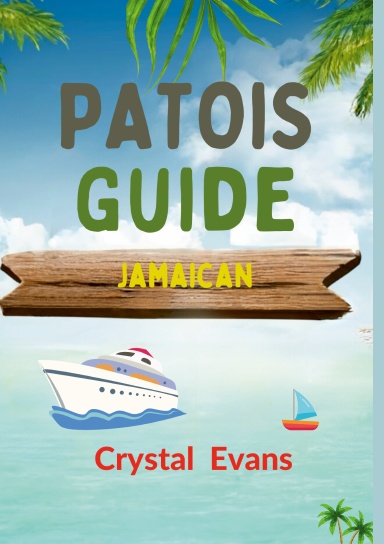
Patois, often referred to as basilect, finds its place among linguistic categories like vernacular, colloquial, dialect, and creole. I, for instance, navigate the mesolect, while those favoring a more refined form lean towards the acrolect. Language, ever-evolving, serves its purpose when mutual understanding prevails in communication. Some proficient in patois may stumble in its written form, spelling creole words in diverse ways, mirroring the linguistic diversity it emerged from.
English, a lexifier to patois, traces its roots to a complex history shaped by Celtic, Bretonnic, Saxon, and Danish influences. Linguists propose English as a pidgin or creole, possibly losing grammar through syncretism. Latin-derived words in English highlight the linguistic interplay.
Patois, a blend of superstrate and substrate languages, reflects layers of historical influence. Stratum and substratum dynamics involve languages like African and English as superstrate, while words from Tainos, Lebanese, Germans, and Indian indentured servants linger as substrates. English, upheld by societal structures post-slavery, remains dominant, even in the face of linguistic diversity.
Details
- Veröffentlicht am
- Mar 5, 2024
- Sprache
- Englisch, Alt (ca.450-1100)
- ISBN
- 9781304568625
- Kategorie
- Geschichte
- Copyright
- Alle Rechte vorbehalten - Standard-Urheberrechtslizenz
- Autoren/Mitwirkende
- Von (Autor): Crystal Evans
Spezifikationen
- Seiten
- 111
- Bindung
- Paperback Paperback
- Farbe für den Innenteil des Buches
- schwarz & weiß
- Abmessungen
- A5 (5,83 x 8,27 Zoll / 148 x 210 mm)