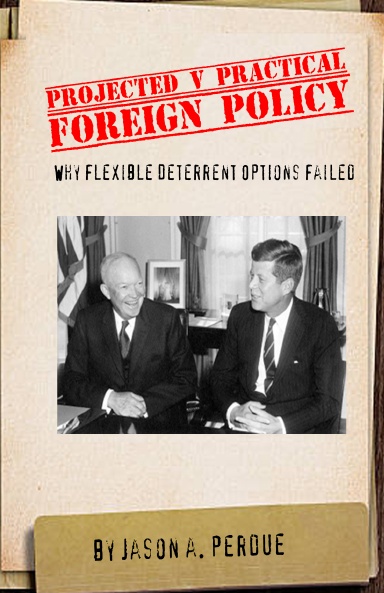
Projected v Practical Foreign Policy
Why Flexible Deterrent Options Failed
PorJason Perdue
Usualmente se imprime en 3 - 5 días hábiles
The secret to Cold War success wasn't strength—it was mystery.
Dwight Eisenhower projected nuclear annihilation while quietly orchestrating flexible covert operations. John Kennedy announced graduated responses and invited the world to test them. One approach kept the peace; the other led to the Bay of Pigs, the Cuban Missile Crisis, and the quagmire of Vietnam.
In this meticulously researched study, historian Jason A. Perdue draws on newly declassified documents to reveal the critical difference between projected foreign policy—what presidents say—and practical foreign policy—what they actually do. The result fundamentally reframes our understanding of Cold War decision-making and why Eisenhower's "hidden hand" proved more effective than Kennedy's celebrated flexibility.
For anyone seeking to understand how American foreign policy works—and why it sometimes doesn't—this book is indispensable.
Detalles
- Fecha de publicación
- Nov 24, 2025
- Idioma
- English
- ISBN
- 9781257012343
- Categoría
- Historia
- Copyright
- Algunos derechos reservados - Creative Commons (CC BY)
- Contribuyentes
- Por (autor o autora): Jason Perdue
Especificaciones
- Páginas
- 109
- Tipo de encuadernación
- Tapa blanda Tapa blanda
- Color de interior
- Blanco y negro
- Dimensiones
- Resumen (5,5 x 8,5 in / 140 x 216 mm)
Palabras clave
Cold War foreign policyEisenhower foreign policyKennedy foreign policymassive retaliationFlexible Responsenuclear deterrencecontainment policyBay of PigsCuban Missile CrisisCIA covert operationsVietnam War originsGuatemala 1954Iran coup 1953Dwight EisenhowerJohn F. KennedyJohn Foster DullesAllen DullesAmerican diplomatic historyCold War historyUS national securitypresidential decision-making1950s America1960s AmericaNSC 162/2New Look policybrinkmanshipstrategic ambiguity