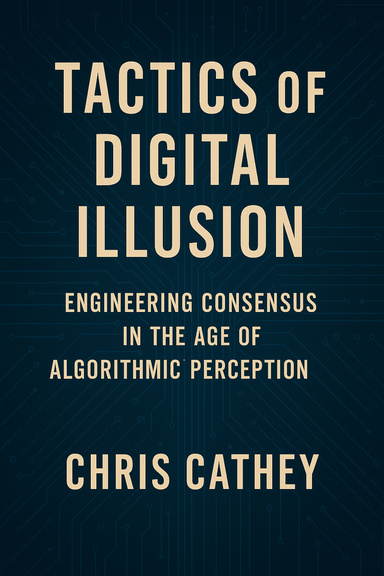
Tactics of Digital Illusion: Engineering Consensus in the Age of Algorithmic Perception
ParChris Cathey
Cet ebook peut ne pas être conforme aux normes d'accessibilité et ne pas être totalement compatible avec les technologies d'assistance.
Perception has become programmable, and consensus no longer emerges; it is engineered. Tactics of Digital Illusion exposes the hidden architectures that shape belief, demonstrating how small, coordinated networks manipulate digital ecosystems to simulate mass agreement and control narrative flow.
Grounded in psychology, systems theory, and modern information warfare, Chris Cathey examines the evolving mechanics of digital influence, including raiding, brigading, astroturfing, symbolic synchronization, and algorithmic gaming. Through detailed analysis, the book reveals how timing, visibility, emotional contagion, and network design converge to create the illusion of organic consensus.
Each chapter investigates a core layer of perception control, such as the illusion of scale, memetic propagation, trust engineering, emotional bait, and feedback loops that reinforce belief. Cathey introduces models such as the Standing Ovation Model, the Percolation Model, and the Common Knowledge Cascade to map how attention becomes power within algorithmic systems.
Written as both a study and a warning, Tactics of Digital Illusion dissects the tactics of modern persuasion while offering pathways to reclaim psychological sovereignty in a world where reality itself is constructed through data, feedback, and design.
Détails
- Date de publication
- Nov 20, 2025
- Langue
- English
- Catégorie
- Sciences humaines
- Copyright
- Tous droits réservés - Licence de copyright standard
- Contributeurs
- Par (auteur): Chris Cathey
Caractéristiques
- Format
- EPUB
Mots-clés
digital illusionalgorithmic perceptionengineered consensusinfluence operationsnarrative manipulationsystems theorycyberneticsinformation warfarecognitive influencememetic spreadsocial engineeringpsychological operations,digital propagandaattention hackingperception shapingnetwork manipulationconsensus dynamicsbehavioral influencedigital ecosystemsinformation control