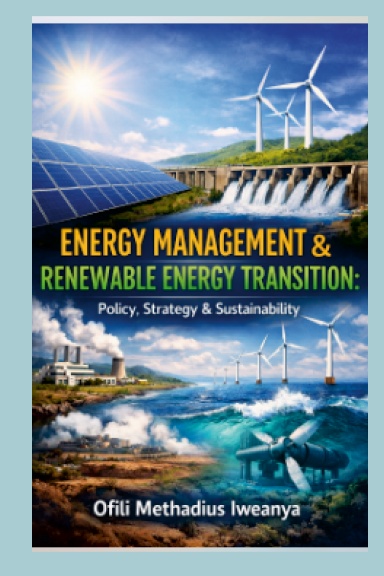
ENERGY MANAGEMENT & RENEWABLE ENERGY TRANSITION
Policy, Strategy & Sustainability
Habituellement imprimé en 3-5 jours ouvrés
The Paris Climate Change Agreement is driving the global energy transition, in order to
arrest global warming and ensure environmental sustainability through GHG emissions
mitigation. Previous transitions were driven by price and availability while the current one is
driven primarily by climate change and energy security concerns. Fossil fuels combustion of
natural gas, oil and coal, used for transportation, heat and electricity has been identified as
the primary culprits of man-made GHG emissions. Deforestation also releases sequestered
carbon back into the air. Logging, forest/wild fires, and clear-cutting contribute about 20% of
global CO2 emissions. Other sources include fertilizer usage (a primary nitrous oxide
emissions source), livestock such as sheep, cattle, goat, and buffalo (main emitters of
methane), as well as some industrial processes that emit fluorinated gases. The cement and
steel industries are also major contributors to GHG emissions. Agriculture and road
construction do alter the earth’s surface reflectivity, giving rise to local cooling or warming.
Although oceans and forests absorb atmospheric greenhouse gases via photosynthesis and
some other processes, these natural carbon sinks are unable to contain global rising
emissions. The Kyoto Protocol established two project-based mechanisms, the Joint
Implementation (JI) and Clean Development Mechanism (CDM) and one trading mechanism
- the Emission Trading Mechanism (ETM). The CDM allows developed nations, to invest in,
and develop emission reduction projects in developing nations, in order to facilitate
sustainable development in such host nations, while offsetting investing the nation’s carbon
emissions. The JI projects enables developed nation’s parties to execute similar projects, in
other developed nations that are signatories to the protocol, resulting in excess emissions
offsets of investing parties. Thirdly, the ETM platform was introduced in order to promote
annually assigned emissions trading, saved by protocol members, to those that have exceeded
their limits. This book explains the main features of renewable/alternate energy solutions;
climate change and GHG mitigation and energy transition strategies, including renewable
energy switch, energy efficiency, carbon capture and storage, natural carbon sequestration
(afforestation), hydrogen and electric vehicles deployment; and explains the global energy policies and just energy transition strategies
Détails
- Date de publication
- Jan 22, 2026
- Langue
- English
- ISBN
- 9781105819117
- Catégorie
- Ingénierie
- Copyright
- Tous droits réservés - Licence de copyright standard
- Contributeurs
- Par (auteur): OFILI METHADIUS
Caractéristiques
- Pages
- 404
- Type de reliure
- Livre à couverture souple Livre à couverture souple
- Couleur de l’intérieur
- Couleur
- Dimensions
- Roman (6 x 9 po / 152 x 229 mm)