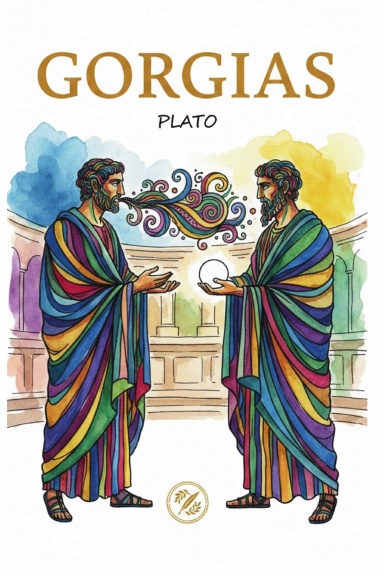
Gorgias is one of Plato’s most powerful and confrontational philosophical works—an intense examination of rhetoric, morality, justice, and the nature of the good life.
Set as a dramatic conversation between Socrates and prominent figures of Athenian public life, including the celebrated rhetorician Gorgias, the dialogue challenges the idea that persuasion alone is a true art. Socrates argues that rhetoric, when detached from truth and justice, becomes a form of flattery rather than genuine knowledge, capable of corrupting both individuals and societies.
As the dialogue unfolds, Plato probes deeper questions about power, pleasure, punishment, and the soul. Socrates defends the radical claim that it is better to suffer injustice than to commit it, and that moral integrity outweighs political success or public acclaim.
Provocative, rigorous, and timeless, Gorgias stands as a foundational text in moral philosophy and political thought—essential reading for anyone interested in ethics, rhetoric, and the enduring conflict between truth and persuasion.
Détails
- Date de publication
- Feb 16, 2026
- Langue
- English
- Catégorie
- Histoire
- Copyright
- Tous droits réservés - Licence de copyright standard
- Contributeurs
- Par (auteur): Plato, Traduction par: Benjamin Jowett
Caractéristiques
- Pages
- 203
- Type de reliure
- Livre à couverture souple Livre à couverture souple
- Couleur de l’intérieur
- Noir & Blanc
- Dimensions
- Roman (6 x 9 po / 152 x 229 mm)
Mots-clés
GorgiasPlato GorgiasPlato dialoguesSocratic dialogueancient Greek philosophymoral philosophy classicphilosophy of rhetoricethics and justice philosophyancient political philosophySocratic methodrhetoric vs philosophyclassical philosophy textspublic domain philosophyphilosophy students readingGreek ethics philosophyPlato Socrates dialoguephilosophy of powerpersuasion and truthjustice and morality philosophyancient philosophy classics