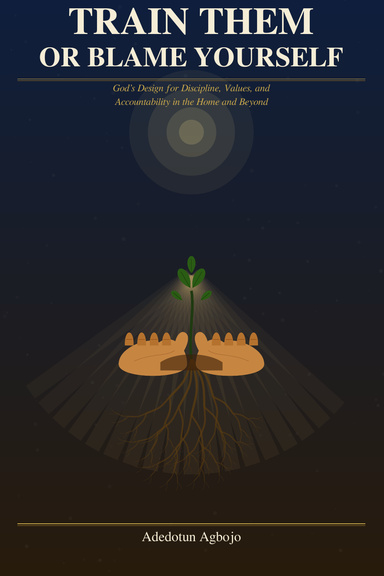
Train Them or Blame Yourself
God’s Design for Discipline, Values, and Accountability in the Home and Beyond
Questo ebook soddisfa gli standard di accessibilità ed è compatibile con le tecnologie assistive. La conformità all'accessibilità è determinata dall'editore e dal creatore.
There is a particular kind of quiet that settles over a
parent who has done everything they knew to do and is
not sure it was enough. Not the dramatic kind of quiet
that announces itself, but the kind that arrives on a
Tuesday, or in a school car park, or in the moment a
grown child says something and you hear, underneath
the words, the shape of something you recognise. This
book was written for that parent. Not because they
failed. But because the kind of formation God designed
for the home is almost never the kind anyone taught
them, and the gap between what they intended and what
was actually built does not have to be the end of the
story.
The Hebrew word chanak sits at the center of this book, though most
parents who have quoted the verse it comes from have never been taught
what it actually means. The ancient Hebrews used it to describe the
dedication of a fruit tree at its first harvest — the act of turning something young and mold able toward its purpose before it has fully formed.
The same word was used for the consecration of a temple. When Solomon
wrote “Train up a child in the way he should go” in Proverbs 22:6,
chanak was the word he chose — not because it meant supervision, or
modelling in a general sense, but because it meant a deliberate, purposeful turning of a life toward what it was made to become, while there is still time.
This book works through that question chapter by chapter — and
it does so by naming things that most homes have left unnamed. The
way values are transmitted not in the lessons you sat down to teach
but in the unguarded moments you did not know were forming anything. The difference between discipline that builds and discipline that merely controls, and why one parent can use the same method as another and produce entirely different children. The culture a family constructs in its ordinary rituals and repeated language, usually without deciding to. The accountability that restores a child’s dignity rather
than dismantling it. And underneath all of it, running through every
chapter, the question of whether the long game still has grace in it for
the parent who is looking back at years already spent.
Whoever you are when you open this— the parent at the beginning,
still young enough to believe you will get this right; or the parent in the
middle, making adjustments you hope are not too late; or the parent
who is past the active years and is still praying, still carrying the weight
Dettagli
- Data di pubblicazione
- May 7, 2026
- Lingua
- English
- ISBN
- 9781105335570
- Categoria
- Educazione dei figli & famiglia
- Copyright
- Tutti i diritti riservati - Licenza di copyright standard
- Collaboratori
- Di (autore): Adedotun Agbojo
Specifiche
- Formato
- EPUB