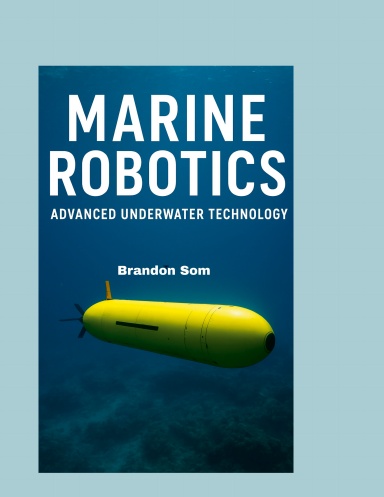
Marine Robotics & Autonomous Systems:
Advanced Technologies for Ocean Exploration, Inspection, and Defense:
Di solito viene stampato in 3-5 giorni lavorativi
Marine robotics and autonomous systems represent one of the most dynamic fields in modern engineering, combining the principles of mechanical design, electrical systems, computer science, artificial intelligence, and oceanography into one integrated discipline. This book, Marine Robotics & Autonomous Systems: Advanced Technologies for Ocean Exploration, Inspection, and Defense, is designed to give readers both a technical and practical understanding of how these machines are conceived, built, and deployed in the world’s oceans. Unlike surface robotics or land-based autonomous systems, marine robots face unique challenges: they must operate in one of the harshest environments on Earth, dealing with crushing pressures, unpredictable currents, limited communication channels, and the absence of reliable GPS navigation once they are submerged. This summary explores the book’s main ideas chapter by chapter, showing how engineers, scientists, and defense organizations are pushing the boundaries of what is possible beneath the sea.
The book opens by laying out the motivations for marine robotics. Oceans cover more than 70 percent of our planet, yet the vast majority remains unexplored. To map these regions, study ecosystems, monitor resources, and protect strategic assets, humans need tools that can go where people cannot easily venture. Remotely operated vehicles (ROVs) and autonomous underwater vehicles (AUVs) provide this capability. While ROVs are tethered and controlled in real-time by operators aboard ships, AUVs navigate independently, guided by pre-programmed missions and artificial intelligence. Together, these platforms form the backbone of modern ocean engineering, and they are increasingly vital for scientific research, oil and gas exploration, renewable energy, defense surveillance, and environmental protection.
The first chapters cover the fundamentals of ROVs and AUVs. ROVs are described as workhorses of the ocean industry. Because they remain tethered to a host vessel, they benefit from constant power and high-bandwidth communication. This allows them to perform complex manipulations, such as repairing underwater pipelines, salvaging wrecks, or conducting high-resolution inspections of critical infrastructure. AUVs, by contrast, must rely on their onboard power supply and sensors, which makes them less versatile in terms of real-time human interaction but more capable of long-duration, wide-area missions. For example, AUVs can map large swaths of
Dettagli
- Data di pubblicazione
- Nov 8, 2025
- Lingua
- English
- ISBN
- 9781257048137
- Categoria
- Computer & tecnologia
- Copyright
- Tutti i diritti riservati - Licenza di copyright standard
- Collaboratori
- Di (autore): Brandon Som
Specifiche
- Pagine
- 188
- Tipo di rilegatura
- Libro a copertina morbida Libro a copertina morbida
- Colore del contenuto
- Bianco e nero
- Dimensioni
- Lettera US (216 x 279 mm)