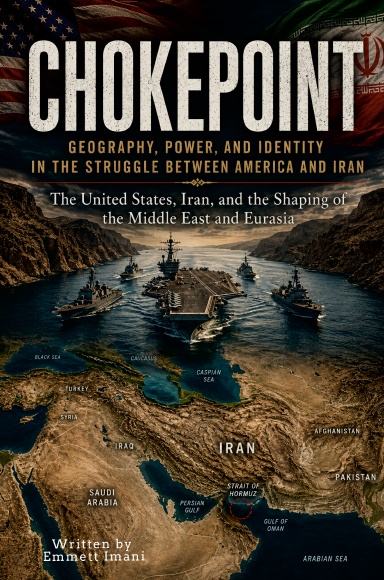
Chokepoint
Geography, Power, and Identity in the Struggle Between America and Iran
Usually printed in 3 - 5 business days
I didn't set out to write a history book. I set out to answer a question that kept following me around: why does the United States and Iran keep circling back to the same argument, decade after decade, dressed in different clothes each time?
I've spent years working the geopolitics of Iran, the Middle East, and Eurasia from the vantage point of institutional diplomacy, and one thing became impossible to ignore. 1953, 1979, the collapse of the JCPOA, the war of 2026, these aren't separate stories. They're the same story, told again with new names attached. Geography doesn't change. Power finds new forms but keeps its old habits. And identity, on both sides, keeps insisting on its own version of events.
I want to be honest about what this book is and isn't. It's not archival history. I didn't sit in the Persian-language collections or the declassified cable rooms doing primary research, and I say so plainly in the pages that follow. What I've built instead is a synthesis, a way of reading seventy years of this rivalry through four lenses at once, geography, power, identity, and the weight of a history neither country can put down. That's a real way to write a book for readers who want to understand where this is heading, not just where it's been.
If there's a thread that runs under everything else, it's this. The tragedy of the American-Iranian relationship was never that the two countries couldn't understand each other. It's that they understood each other perfectly, and chose confrontation anyway. I wrote this book hoping that understanding might, eventually, be put to better use.
Details
- Publication Date
- Aug 17, 2026
- Language
- English
- ISBN
- 9781972640012
- Category
- History
- Copyright
- All Rights Reserved - Standard Copyright License
- Contributors
- By (author): Emmett Imani
Specifications
- Pages
- 204
- Binding Type
- Hardcover Case Wrap
- Interior Color
- Black & White
- Dimensions
- US Trade (6 x 9 in / 152 x 229 mm)
Keywords
Iran-United States rivalryPersian Gulf securityIranian Revolution 1979hostage crisis historyIslamic Republic of Iransanctions and Iranian economyZangezur Corridor South CaucasusTurkic-Persian frontierEurasian great power competitionChina Iran Russia relationsAmerican exceptionalism foreign policyShia identity revolutionary ideologyproxy warfare Middle EastGulf Arab states diplomacyIranian diasporageopolitics of oil and energy security2026 Iran warPakistan mediation diplomacynuclear diplomacy Middle Easthistory of American foreign policy in the Middle Easthistorical memory and foreign policy decision-makingtrack II diplomacy Iranalliance management Gulf Arab statesenergy security and global oil marketsIran nuclear breakout timelineU.S. foreign policy continuity and rupturepost-ceasefire Middle East architectureregional order and containment doctrinecoercive diplomacy case studyproxy warfare and state fragilityChina-Iran-Russia axisgreat power competition EurasiaStrait of Hormuz chokepoint securityU.S. credibility in the Gulfnuclear nonproliferation JCPOAmaximum pressure sanctions policyescalation dynamics 2026 wardeterrence theory Irangrand strategy Middle East