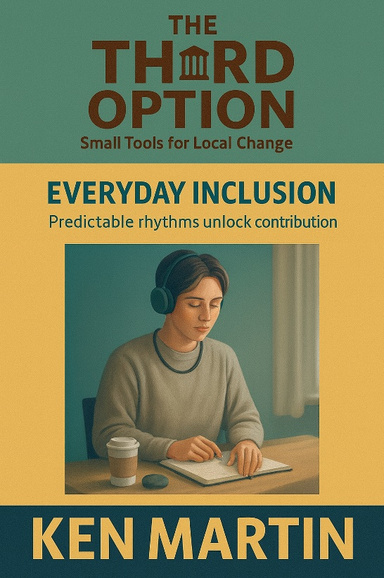
Everyday Inclusion
A Third Option Mini Guide
This ebook may not meet accessibility standards and may not be fully compatible with assistive technologies.
The UK is raising concerns about the rise in autism and ADHD diagnoses. Some say criteria widened. Others point to long waits for assessments that push people toward labels so they can access basic support. A harder view says the system itself creates the demand.
But most strain appears long before any diagnosis. Daily life moves at a pace many cannot match. Digital layouts shift overnight. Transport is loud. Workplaces reward rapid switching. Community rooms miss quiet corners. These conditions overload attention and drain energy across the population, not only for those who seek assessment.
The Third Option inclusive mini guide takes a different approach. It focuses on predictable timing, clear steps, quiet areas, simple layouts, and familiar contact points. These adjustments fit inside current roles. They lower strain without new funding. They help people stay involved because the environment supports their limits.
This shifts the debate. The issue is not only diagnosis. The issue is whether daily environments match human capability. When conditions steady, people finish more tasks, attend more often, and rely less on crisis services. They return to shared spaces because they trust the rhythm of the day.
Third Option suggests a practical way to improve participation without extra resources, hopefully, this guide gives you a simple place to start.
THE THIRD OPTION
The entry point for all documentation and posts about Third Option, Small tools for local change, is my Substack https://lnkd.in/e36tmuDx. All materials are free to use, share and adapt.
Details
- Publication Date
- Dec 11, 2025
- Language
- English
- Category
- Social Science
- Copyright
- All Rights Reserved - Standard Copyright License
- Contributors
- By (author): Ken Martin
Specifications
- Format