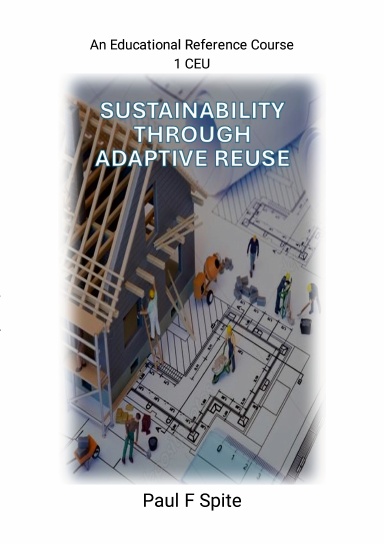
When considering how to best utilize aging structures, various options are typically considered, involving reusing, repairing, restoring, repurposing, or replacing them.
There is an old saying pertaining to existing buildings that can be stated as follows: "It has good bones." Any establishment with no structural flaws and effectively preventing water infiltration represents a tangible asset. The key to maximizing the value of preexisting structures, especially in areas where changing economic factors have led to shifting market demands, lies in adopting a fresh perspective on their reuse. A wise allocation of renovation funds should not aim to restore old buildings to their former function, but rather to make them suitable for alternative markets, in which they could house an entirely new occupancy.
In this course, we will offer a set of criteria that can be used in assessing the most advantageous options for building reuse. These will help to determine which course of action provides the best value to the owner, buyer, and the local community where the structure is situated. Any reuse of older buildings is better for all parties involved than not reusing them at all.
Details
- Publication Date
- Aug 2, 2025
- Language
- English
- ISBN
- 9781257943814
- Category
- Education & Language
- Copyright
- All Rights Reserved - Standard Copyright License
- Contributors
- By (author): Paul Spite
Specifications
- Pages
- 38
- Binding Type
- Paperback Perfect Bound
- Interior Color
- Black & White
- Dimensions
- A5 (5.83 x 8.27 in / 148 x 210 mm)