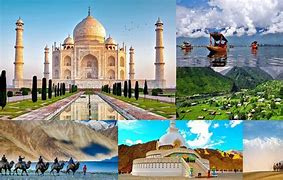
HINDI EMPIRE
A History of Indian Empire
This ebook may not meet accessibility standards and may not be fully compatible with assistive technologies.
This section describes the multiple contexts in which the Mughal Empire developed and then summarizes the most important characteristics of the Mughal polity.
Historians have traditionally identified Babur as the founder of the Mughal Empire and considered his invasion of northern India in 1526 as the beginning of Mughal history. Both the identification and date are misleading. Babur’s grandson, Akbar, established the patterns and institutions that defined the Mughal Empire; the prehistory of the empire dates back to Babur’s great-great- grandfather Timur’s invasion of north India in 1398. Because Timur remained in Hindustan (literally, “the land of Hindus”; the Persian word for northern India) only a short time and his troops sacked Delhi thoroughly, historians have traditionally treated his incursion as a raid rather than an attempt at conquest. Timur, however, did not attempt to establish direct Timurid rule in most of the areas he conquered; he generally left established dynasties in place or established surrogates of his own. His policy in Hindustan was the same; he apparently left one Khizr Khan as his governor in Delhi. Khizr Khan and his successors remained formally subordinate to the Timurids for more than forty years, probably until after the death of Timur’s youngest son and effective successor, Shah Rukh, in 1447. Peter Jackson, the leading historian of the Delhi sultanate, asserts that “Shah Rukh’s influence in the subcontinent seems to have been extensive.
Details
- Publication Date
- Aug 5, 2025
- Language
- English
- Category
- Social Science
- Copyright
- All Rights Reserved - Standard Copyright License
- Contributors
- By (author): Seyed E. Zamani
Specifications
- Format
- EPUB