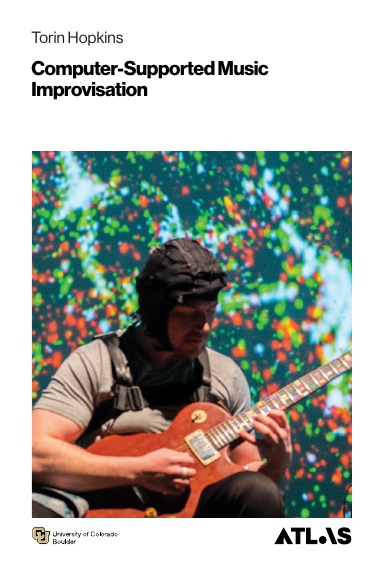
Music improvisation is an ancient practice that is deeply ingrained in human social interaction and expression. Currently, paradigms in music practice predominantly focus on competitive “performance principles”, often neglecting social aspects of our musical heritage. This thesis contends that technology should shift from reinforcing this convention to actively facilitating collaborative music experiences. A framework grounded in the perception-action loop is proposed for guiding the design of computer-supported music improvisation systems. The research explores four key areas where technology can enhance improvisational music activities: 1) expanding the community of musicians by understanding how we learn and use musical information, 2) enabling remote jamming through extended reality and networking, 3) facilitating jamming with computational systems using AI and brain-computer interfaces, and 4) incorporating audience participation in live improvisational performances. In so doing, this research contributes to a more inclusive and socially meaningful approach to music education, play, and performance.
Details
- Publication Date
- Jul 28, 2025
- Language
- English
- Category
- Computers & Technology
- Copyright
- All Rights Reserved - Standard Copyright License
- Contributors
- By (author): Torin Hopkins
Specifications
- Pages
- 388
- Binding Type
- Paperback Perfect Bound
- Interior Color
- Color
- Dimensions
- US Trade (6 x 9 in / 152 x 229 mm)