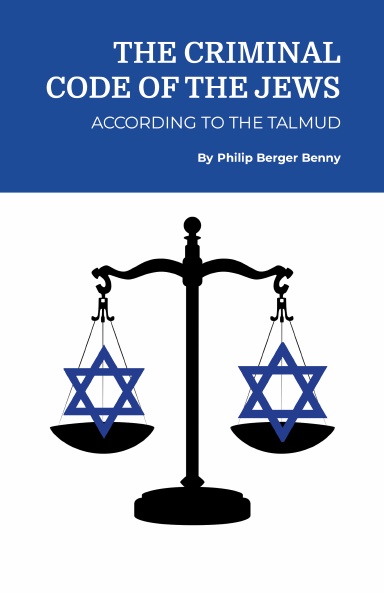
The Criminal Code of the Jews
According to the Talmud
Usually printed in 3 - 5 business days
Philip Berger Benny’s The Criminal Code of the Jews (1880) offers a detailed examination of Jewish criminal law as interpreted through the Talmud, specifically the tractate Massecheth Synhedrin. Originally serialized in the Pall Mall Gazette, the work aims to illuminate the judicial principles and penal practices of ancient Jewish society, emphasizing their moral and procedural foundations. Benny begins with a historical overview of Mosaic law, noting its evolution and the influence of rabbinic interpretation. He explores how certain laws became obsolete while others were refined through Talmudic prescriptions. The book then delves into the structure of Jewish courts, outlining the qualifications and disqualifications for judges, the division of judicial authority, and the procedural norms governing trials. A significant portion is devoted to evidentiary rules, especially in capital cases, where the emphasis on due process and the protection of the accused is pronounced. Benny describes various methods of execution prescribed by Jewish law, including stoning, burning, and strangulation, and discusses their symbolic and legal significance. The final chapters address specific crimes such as murder, adultery, and idolatry, as well as the concept of cities of refuge, punishments for perjury, and the use of flogging. Benny concludes by reflecting on the broader ethical and cultural implications of the Jewish legal tradition, portraying it as a system deeply concerned with justice, restraint, and communal responsibility.
Details
- Publication Date
- Aug 4, 2025
- Language
- English
- Category
- Religion & Spirituality
- Copyright
- Creative Commons NonCommercial, NoDerivatives (CC BY-NC-ND)
- Contributors
- By (author): Philip Berger Benny
Specifications
- Pages
- 139
- Binding Type
- Paperback Perfect Bound
- Interior Color
- Black & White
- Dimensions
- Digest (5.5 x 8.5 in / 140 x 216 mm)